
date published
Mar 30, 2026
reading time
5 min read
How to Plan Your Day When You’re Completely Overwhelmed
When everything feels urgent and you can’t start, try these practical steps to cut through the noise and find your focus.
You sit down to work and your brain immediately lists seventeen things that need attention. Three of them were due yesterday. Two just landed in your inbox. At least four feel equally urgent. And you’re not even sure which ones you’re responsible for any more.
So you do the most natural thing in the world: nothing.
Overwhelm is a signal that your system or lack of one, can’t handle the volume of decisions your day is demanding. The good news is that getting unstuck doesn’t require motivation or willpower. It requires a process.
Here’s how to plan your day when everything feels like too much:
Step 1: Get everything out of your head
The first thing to do when overwhelmed is stop trying to hold it all in your head. Your brain is not a filing cabinet. When you force it to store and prioritise simultaneously, it freezes.
Take five minutes and dump everything. Every task, every obligation, every half-formed idea, every “I should probably...” Write it down, type it out, or speak it into a voice note. Don’t organise or prioritise, just get it out.
This alone will reduce your anxiety. Research on the Zeigarnik effect shows that unfinished tasks occupy mental space until they’re captured in an external system. Once they’re written down, your brain relaxes.
Step 2: Separate urgent from important
Now that everything’s in front of you, you need to sort it. But not into neat priority tiers that’s too many decisions when you’re already overwhelmed. Instead, ask one simple question for each item:
“Will something bad happen if I don’t do this today?”
If yes, it’s urgent. If no, it can wait. That’s it. You’re not ranking importance or assigning priority scores. You’re making one binary decision per task. This is manageable even when your brain feels full.
Most people discover that fewer than a third of their tasks are genuinely urgent. The rest feel urgent because of proximity or guilt, not actual consequences.
Step 3: Pick three things. Only three.
Look at your urgent items. Pick the three that would make the biggest difference if you completed them today.
This feels counterintuitive when you have 20 things to do. But trying to plan for all 20 is exactly what got you stuck in the first place. Three items is a plan you can actually execute. It’s specific enough to follow and limited enough to be achievable.
If you finish all three and still have energy, great pick one more. But starting with three removes the paralysis of facing a wall of tasks.
Step 4: Assign time
A task without a time slot is just a hope. Look at your calendar and ask: when will I do each of these three things?
Be realistic about how long each one will take. Most people underestimate by 50–70% a well-documented pattern called the planning fallacy. If you think it’ll take an hour, block 90 minutes. Give yourself more room than you think you need.
Block these time slots on your calendar. Treat them like meetings non-negotiable appointments with your own work.
Step 5: Protect the plan
The biggest threats to your plan are interruptions, unexpected meetings, and the constant temptation to check emails “just in case.”
For each time block: close unnecessary tabs, put your phone face down, set your status to busy, and commit to that one task for the duration. You’re protecting 60–90 minutes of focused work.
If something genuinely urgent comes in during a time block, finish your current thought, write down where you are, and deal with the interruption. Then return to exactly where you left off.
Step 6: Accept that the list won’t be empty
This might be the most important step. Overwhelm often comes from the belief that you should be able to do everything on your list. You can’t. Nobody can.
A productive day is one where you moved the most important things forward. If you completed your three priorities and made progress, that’s a successful day even if 15 items are still waiting.
Give yourself permission to leave things undone. They’ll be there tomorrow, and you’ll be better equipped to handle them after a rest.
What if this still feels like too much?
If even following these steps feels overwhelming, that’s a sign that the problem is the system you’re using to manage it. Manual planning, by definition, requires decisions. And decisions are exactly what your overwhelmed brain can’t handle.
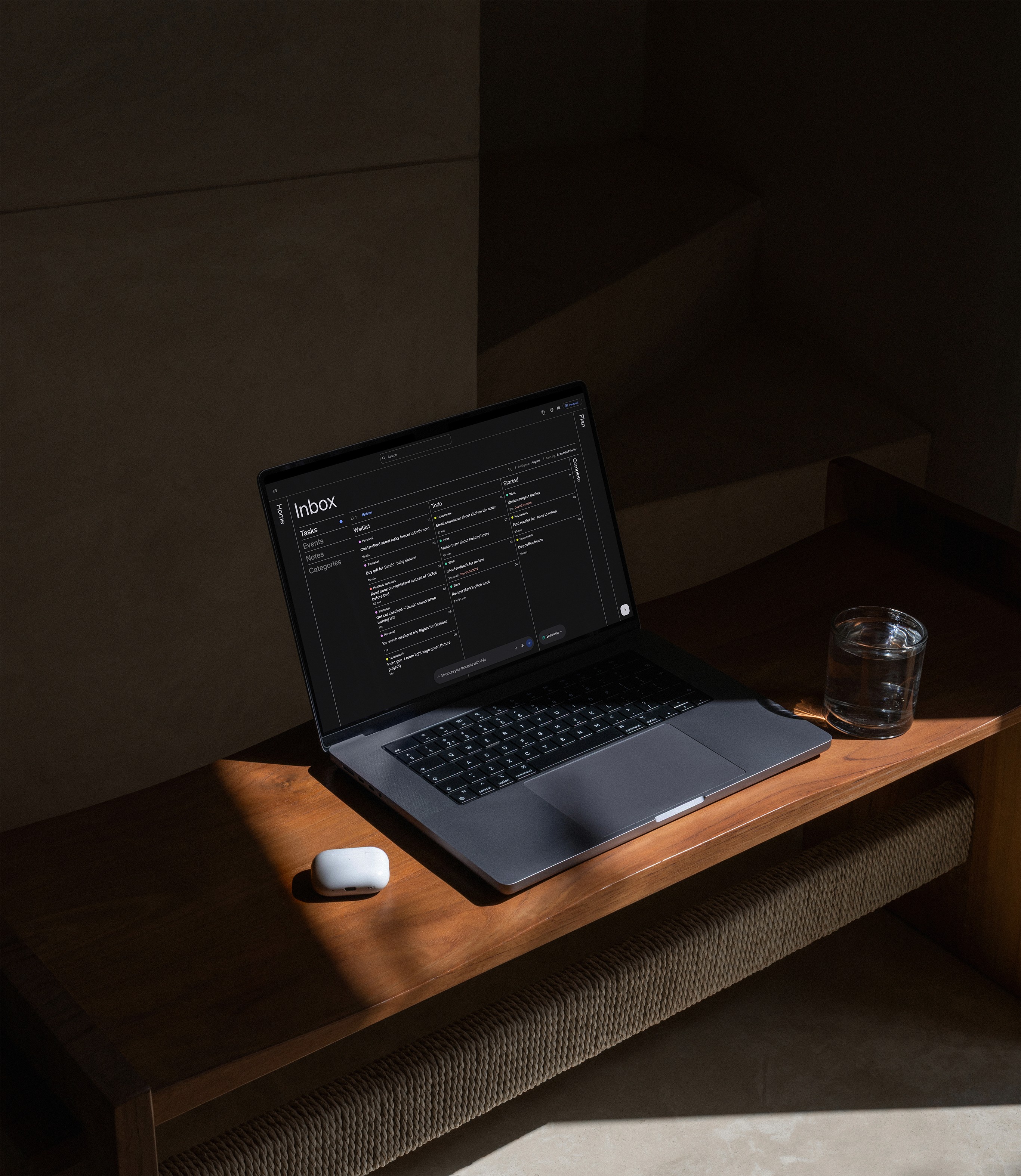
This is where an automated planner changes everything. Via is built specifically for moments like this. You dump everything out of your head messy, unstructured, half-formed and Via’s AI does the rest. It structures your tasks, estimates durations, sets priorities based on deadlines and importance, and builds a schedule that fits your day.
You don’t have to separate urgent from important. You don’t have to pick three. You don’t have to assign time blocks manually. Via handles all of it. And when your day inevitably changes, Via adapts the plan automatically.
It’s the difference between being your own project manager when you’re already drowning and having one that does the thinking for you.
Overwhelmed? Let Via plan your day.
Dump your tasks, and Via builds a plan you can actually follow. When things change, your plan changes too.
Subscribe to our newsletter
See also
Discover what productive looks like
30 second setup • 14 day free trial